
Precautions for Packing Steel Reinforcing Mesh (for Export)
Release time:
2026-09-17
reinforcing mesh1. Stacking & Anti-deformationStack the mesh flat and align all four sides. Do not leave any side suspended to avoid warping and weld cracking of the mesh.Control stacking height to prevent excessive load on the bottom layer. For long-size mesh, edge protectors (paper or plasti
1. Stacking & Anti-deformation
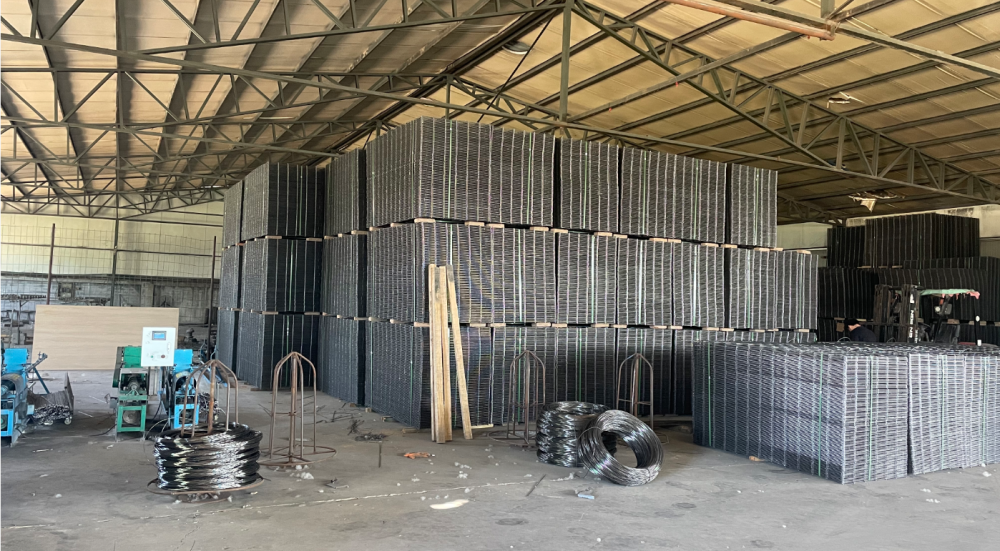
Stack the mesh flat and align all four sides. Do not leave any side suspended to avoid warping and weld cracking of the mesh. Control stacking height to prevent excessive load on the bottom layer. For long-size mesh, edge protectors (paper or plastic) are recommended to protect corners from bumps and bending. Only mesh of the same specification can be stacked on one pallet. Separate different sizes to avoid local stress and deformation.
2. Strapping & Securing
Use steel straps or polyester strapping with moderate tension. Too loose will cause shifting during transit; too tight may damage the mesh welds. Use multiple cross straps on each pallet. Place edge protectors between straps and mesh edges to prevent cutting. Wrap the whole pallet with stretch film to integrate mesh and pallet, preventing loose packages during shipment.
3. Moisture & Rust Prevention (Critical for Sea Freight)
For black wire steel mesh: wrap with waterproof film and rust-proof paper. Place desiccants inside containers to avoid condensation and rust at sea. Galvanized mesh also requires waterproof film to prevent white rust caused by marine mist. Inspect mesh surface before packing. Remove oil stains and rust spots, and ensure mesh is fully dry before packaging.
4. Pallet & Container Loading
Export wooden pallets: complete fumigation and mark IPPC as required by destination countries. Some countries ban raw wood pallets; plastic pallets can be used instead. When loading pallets into containers: distribute weight evenly and keep the center of gravity stable. Wedge gaps between pallets and container walls with timber blocks to prevent sliding in rough sea transport. Inspect containers before loading: no leaks, protruding nails or debris. Lay moisture-proof mats on container floors.
5. Labeling & Documentation (Mandatory for Export)
Affix labels on the outer film of each pallet, including product name, wire diameter, mesh opening, quantity, net/gross weight, batch number and shipping mark. Ensure labels are clearly visible. Take photos for records: before packing, after packing and during container loading, and send them to customers.
6. Loading & Unloading Safety
Forklift forks should lift pallets only. Do not drag mesh bundles directly. Never lift mesh at a single point to avoid tearing and deformation. Handle gently. Avoid dropping from height, which may break welds.
Previous
Next
related news
2026-08-27
2026-08-27